
Skip to content

London studio · Taught online across the UK

Education only · Not personal financial advice

Classroom notes

Four teaching scenes, written so you can hear the room

These notes are composite vignettes. They are built from the kinds of cases the syllabus uses. They are not testimonials, they are not case studies of named clients, and they do not report investment results. Any first name below is a teaching label, not a person you can contact.

Two people in a careful conversation at a wooden table

Scene one · The advice meeting

Priya stops treating a nod as a decision

In the vignette, Priya is a paraplanner who prepares the meeting notes. The client nods at a contribution increase. On the train home, according to the follow-up call the vignette invents, the client says he thought he was only “looking”. Week nine asks the room to mark the transcript: where the question stopped being a question, which number arrived first, and what a slower close would have sounded like.

The exercise does not produce a model script to paste into a suitability report. It produces a habit of writing, in the margin, “did they choose, or did they assent?”. That distinction is the whole scene.

Scene two · The kitchen table

Owen’s holiday jar and the card he will not name

Owen, in the teaching note, keeps a separate pot for a week in Cornwall and a credit card he describes as “short term” even though the balance has had a birthday. The mental-accounting week asks him to draw both on one page and to say which jar is allowed to pay the other. He decides the holiday pot may not be touched. The room does not correct him. The room asks what the rule is protecting, and what it costs in interest by Christmas.

No one tells Owen to cancel Cornwall. The point of the scene is that a rule can be loved and still be expensive, and that seeing both facts is already a different decision from pretending the card is a different kind of money.

Morning light on a kitchen table with tea, glasses, and a plain envelope
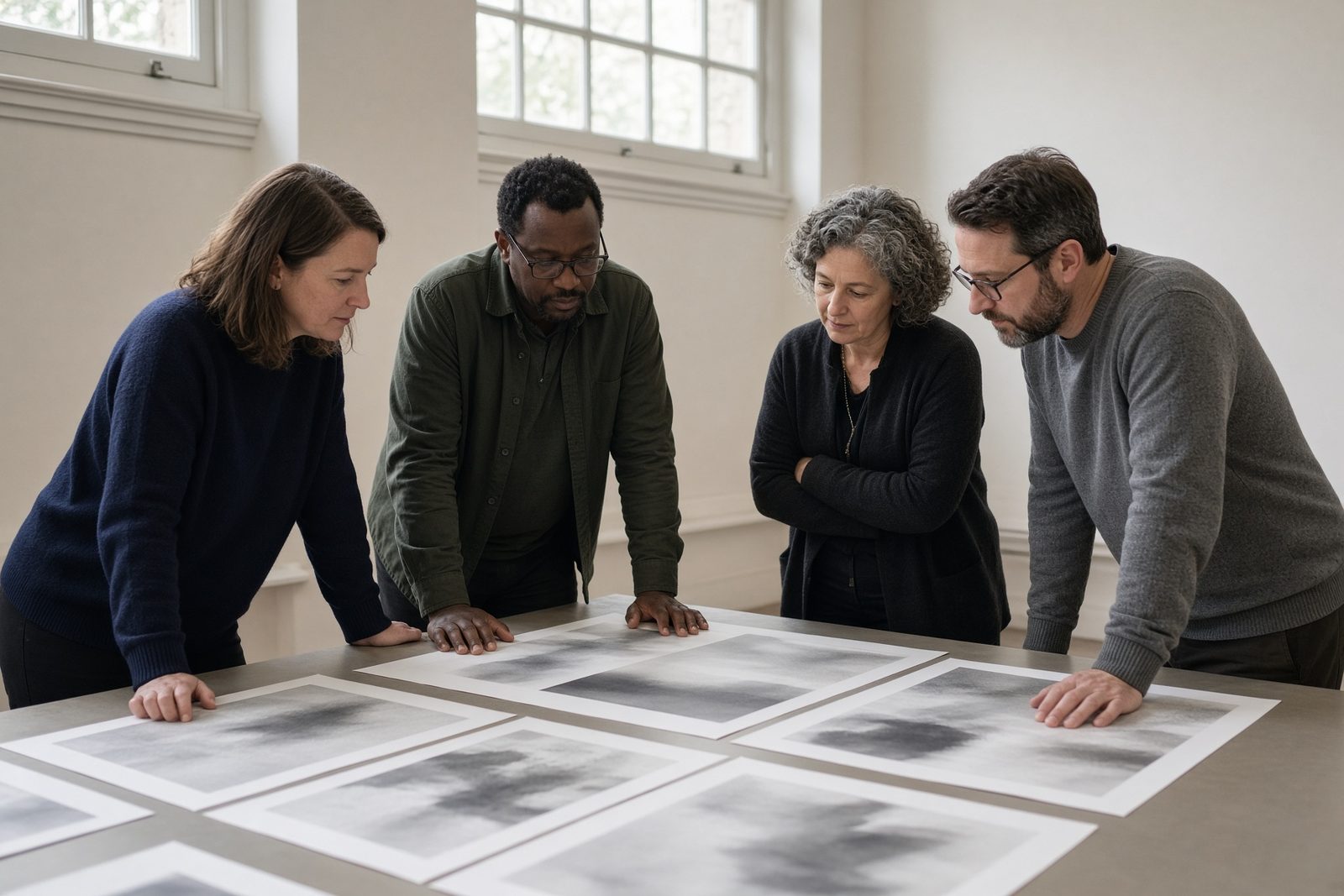
A small group standing around a seminar table covered in large sheets

Scene three · The product team

A default that nobody on the team had tried to refuse

A four-person product group brings a redacted onboarding flow. New users land in a savings setting that is pre-ticked. The team can explain the commercial reason. They cannot, at the start of the studio, explain what a tired person would need in order to untick it on purpose. The Saturday exercise is to opt out themselves, on a paper prototype, while someone times the silence.

The vignette ends with a rewritten screen, not with a claim about conversion. The rewritten screen puts the consequence of the default in the same view as the tick. That is a design change the course is willing to call a success. A change in sign-up rate is not a number we publish, because we did not measure one.

Scene four · The forecast diary

Leah’s confidence, scored against the trains

Leah works in a treasury team and describes herself as “pretty calibrated”. For fourteen days she writes small forecasts: whether a report will land on the promised morning, whether a meeting will overrun, whether she will leave the office by six. She gives each one a probability. At the end of the fortnight the hits and the probabilities do not match. She was sure more often than the world agreed.

The scene is deliberately dull. Markets never appear. The transferable piece is the discomfort of a written probability, which is harder to decorate than a feeling of being on top of things. Learners who want a diary template receive one in week six. It is a table. It is not a trading journal.

Close view of a hand writing in a notebook beside tea

What we will not claim underneath a story

  • We will not say a learner earned a return because they took the course.
  • We will not quote a star rating, a salary increase, or a client-retention figure.
  • We will not imply that a vignette is a review of Agenaxora.
  • We will say, plainly, that the work is reading, talking, and writing until a decision can be seen from the outside.
Ask whether the room is right for you